


Handwriting your to-do lists, priorities, goals, or meeting notes creates a planning experience that many find indispensable. Choosing the right pen isn’t all about looks or even status. It directly influences comfort, speed, legibility, and even how consistently you stick with your planning systems. In this guide, we’ll explore how different pens support different work styles and planning techniques to help you find the tools that match your flow.
Key Takeaways
Choosing the right pen can improve comfort, reduce hand fatigue, and support writing speed and clarity.
Handwriting engages multiple brain areas associated with memory, focus, and cognition, providing unique productivity benefits.
Pen features like ink type, ergonomics, line width, and flow all contribute to how well a pen supports your planning style.
Different task management methods benefit from different pen characteristics, from fast lists to detailed diagrams.
Building a small toolkit of pens can boost organisation and enhance your personal workflow.
Why Your Pen Choice Matters for Productivity
Handwriting plays an important role in how our brains process and retain information. Even in a digital era, handwriting plays a vital role in how our brains process and retain information.
Studies have shown that writing by hand activates multiple regions of the brain involved in learning, memory, and cognitive processing, which is far more than typing could ever achieve.
This isn’t just academic: the physical act of forming letters requires more engagement and intentional thought than tapping keys, forcing us to slow down and connect with what we’re writing. That deeper mental processing supports memory retention, prioritisation, and the focus required for planning and task management. Handwriting your tasks makes them feel more “real” and improves recall compared with digital input alone.
But choosing an uncomfortable, scratchy, or poorly balanced pen can add friction to this process. Writing can feel like a chore, leading to skipped entries, messy notes, or avoiding your planner altogether. That’s where the right pen can make all the difference: it supports comfort, clarity, and consistency.
Understanding How You Work: Identifying Your Planning Style
No two planners are the same, and no single pen fits all planning needs. Before recommending specific pens, it helps to understand how you work.
The Fast Planner
You thrive on rapid lists and quick captures throughout the day. You want a pen that keeps up with your thoughts, offering smooth flow and minimal resistance so ideas can spill onto the page effortlessly.
The Detailed Planner
Your style leans toward longer notes, structured outlines, and thorough reflections. Comfort is key here. You’ll benefit from ergonomic pens that reduce fatigue in extended writing sessions.
The Visual Organiser
Charts, arrows, colour coding, diagrams – your pages aren’t just text. Pens with consistent line quality and a range of colour options support visual differentiation and clarity.
The Minimalist Planner
Clean, simple lists and uncluttered spreads are your jam. You prefer fine, precise lines that keep things neat and streamlined.
Each of these styles pairs better with certain pen types, which we’ll explore next.
Key Pen Features That Influence Comfort and Flow
When evaluating pens for planning, it helps to understand the features that affect comfort and performance:
Grip & Ergonomics
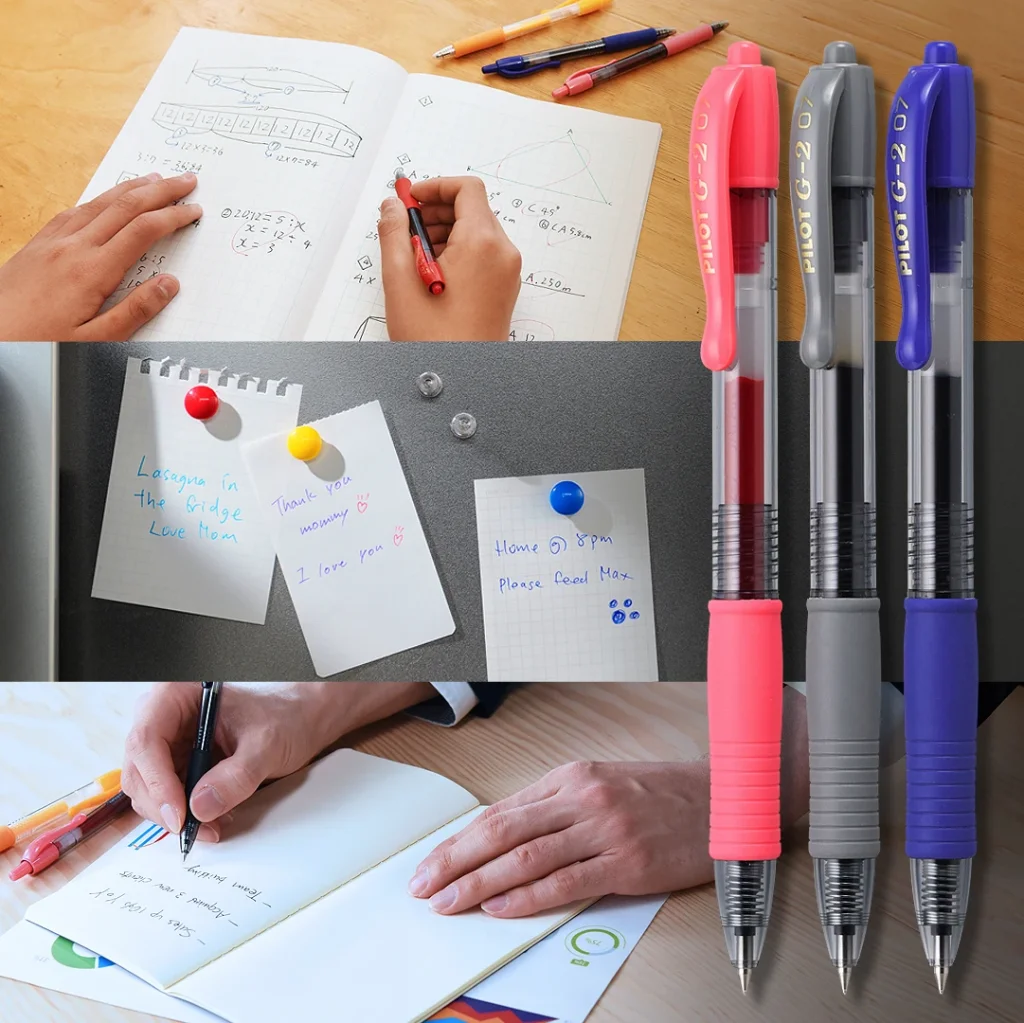
A comfortable grip can make long writing sessions easier, reducing strain on fingers and wrists. Ergonomic pens with rubberised or contoured grips support natural hand positioning and reduce tension buildup.
This can help ease longer mindful writing sessions or prevent fatigue from multiple shorter writing sessions throughout the day, making it easier to maintain good writing habits.
Ink Type
The type of ink you opt for can make quite a difference in your daily life. Rollerball, ballpoint, gel, and fountain pens are all viable options, but there are trade-offs.
Pen Type | Pros | Cons |
|
| |
|
| |
|
| |
|
| |
|
| |
|
|
For everyday writing, a trusty ballpoint pen will get the job done. For long, detailed sessions or keeping a bullet journal or other task management system, a combination of a gel, rollerball, and/or fineliner can give you options to express your creative flair while keeping things orderly.
Line Width
Tip size affects both readability and the overall feel of your planning system. A mix of tip sizes generally works well, and here’s how they’re typically defined:
Fine tips (0.3–0.5 mm) for precision and small handwriting.
Medium tips (0.7–1.0 mm) for balanced everyday use.
Broad tips for bold headers and emphasis.

Smoothness & Flow
A pen with consistent, reliable ink flow lets you write fluidly without pauses or skips, ideal for both speed and comfort. If you’re doing detailed planning or even brainstorming, a smooth pen can help get more on the page faster.
Best Pens for Different Task Management Methods
Different planning systems benefit from different writing tools. Here are some practical pairings:
Daily To-Do Lists
Fast capture needs a pen that glides with minimal resistance. Mid-range gel pens or smooth rollerballs let you jot entries quickly and clearly.
Bullet Journalling
Bullet journalling often combines structure and creativity. Fine to medium gel pens with stable ink flow are perfect for neat lists, calendars, symbols, and trackers.
Time-Block Planning
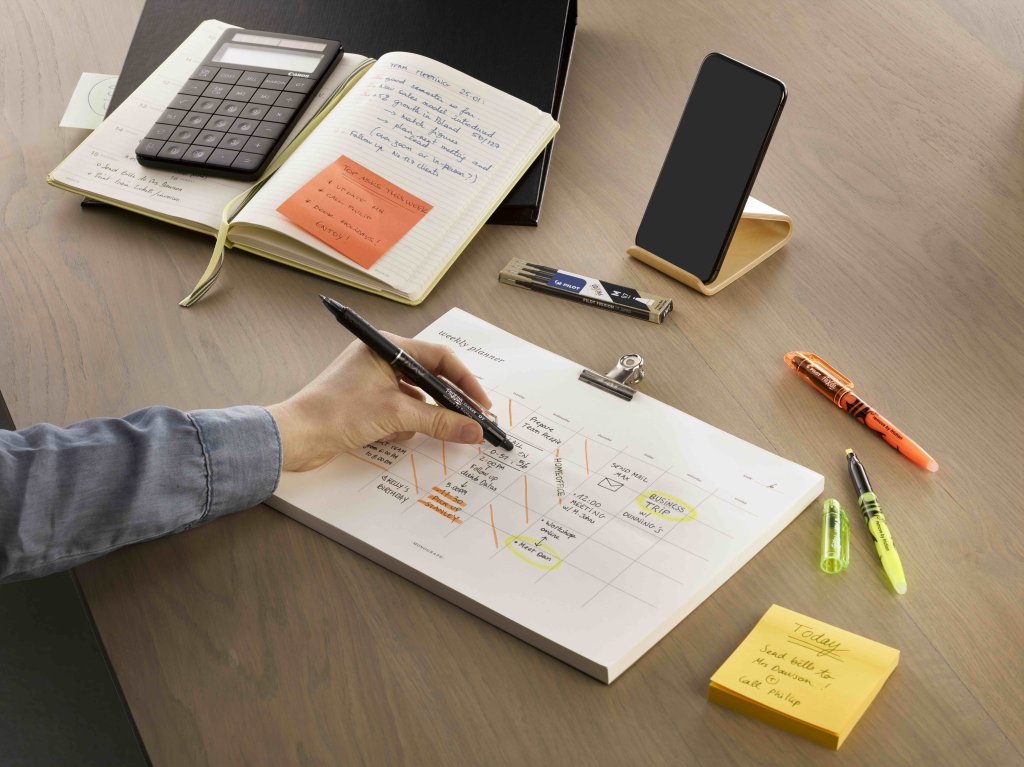
Colour can help segment your day into blocks, so consider a set with multiple ink colours, or opt for a multifunction pen that provides four colours, perfect for setting your priorities.
Project Planning & Mapping
You’ll want pens that support diagrams and branching. Medium lines and smooth ink help maintain legibility across complex layouts.
Meeting Notes
Clear, clean writing is key. Quick-drying ballpoints or smooth gel pens help ensure meeting content stays readable with minimal smudging.
Matching Pen Types to Work Environments
Where you do your writing matters.
Office Environments
When switching frequently between tasks, a reliable gel or hybrid ink pen that doesn’t skip or drag can help maintain momentum and clarity.
Remote Work/Home Office
Comfort is priority number one here. Pens with ergonomic grips and smooth ink flow reduce hand tension during long planning or note sessions.
On-the-Go Professionals
Quick-drying inks that resist smudging are a must, especially for left-handed writers. Compact designs also fit into daily carry essentials.
Students & Researchers
Note-heavy workflows benefit from a variety of pens. Use fine tips for detail and vibrant colours to highlight key points or annotations.
Using Colour to Support Organisation and Focus
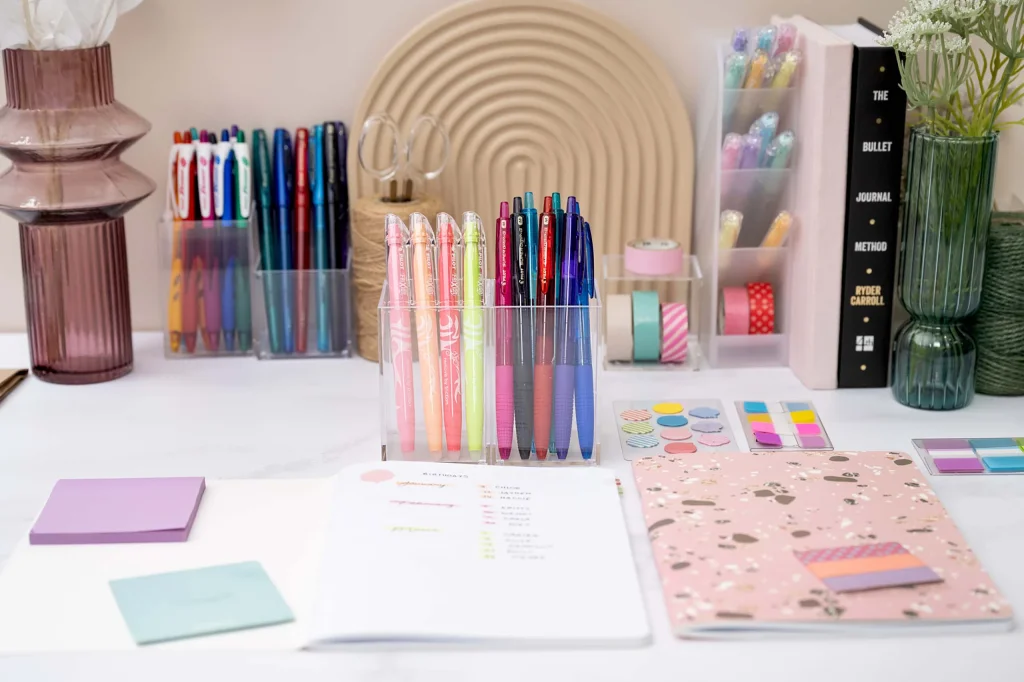
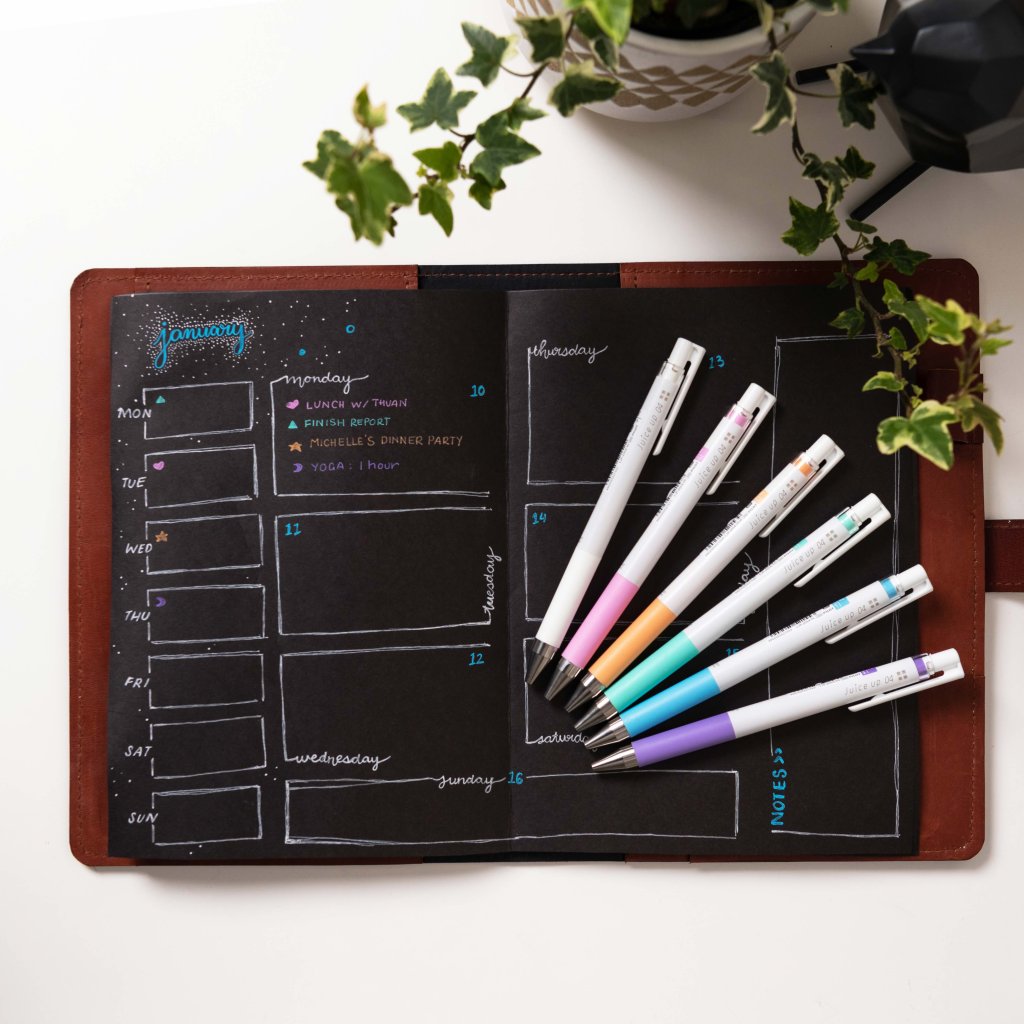
Colour coding isn’t all about creativity; it’s practical, too. Assigning colours to different categories (e.g., priority, deadline proximity, project type) helps the brain visually segment tasks and recall them faster.
Some people reserve black for standard notes, red for urgent tasks, and blue or green for personal projects or ideas. Beyond organisation, the act of choosing colours enhances cognitive engagement and helps information stick.
Building a Pen Toolkit for Better Planning Habits
No single pen does everything perfectly. Think of your planning toolkit as a set of complementary tools, which can include:
A smooth gel pen for everyday lists and notes.
A fine-tip option for detailed entries or small handwriting.
A coloured pen (or two) for priorities and highlights.
A quick-drying ballpoint for fast capture and minimal smudge.
Rotating between pens keeps your planning fresh and comfortable, and helps prevent hand fatigue during longer writing sessions.
Final Tips for Finding Your Flow
Finding your flow with pen and planner is personal, but a few general tips can help:
Test before you commit: Try a few pen types to see what fits your grip, stroke, and comfort level.
Pay attention to fatigue: If you find your handwriting tiring or uneven, a change in grip, ink type, or ergonomics can make a huge difference.
Match pens to tasks: Reserve your favourite “everyday” pen for daily lists, and special pens for creative or long-form writing.
Enjoy the process: When planning feels enjoyable — because your tools feel good — you’re more likely to make it a habit.
The Perfect Pen Awaits
Choosing the right pen isn’t just about aesthetics. It’s also about enhancing comfort, clarity, and cognitive engagement in your task management and planning. The right pen helps you work with intention, reduces friction in the writing experience, and supports the habits that keep you organised and productive. Whether you prefer bold colours, quick-drying ink, ergonomic grips, or fine precision tips, there’s a pen out there designed to help you find your flow and tackle your to-dos with confidence.
To begin your journey, explore PILOT’s range of pens that include all the core ink types, barrel styles, and more.

About Author
Stephanie Janolo
At Pilot Pen Australia, she bridges the gap between digital and timeless writing instruments. Beyond the realm of pixels and algorithms, her inspiration strikes in the form of art, museums and lyrical narratives of Taylor Swift.